Baroque: an Art Movement that Dared to Feel
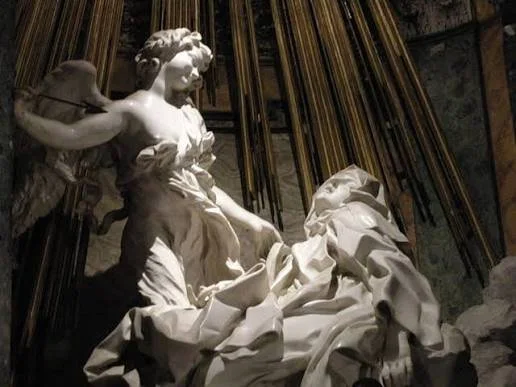
Gian Lorenzo Bernini, The Ecstasy of Saint Teresa, sculpture, 1647–1652
The exemplary fusion of body, mystical psychology, sculpture, architecture and controlled light.
c. 1580–1750
Dates vary across regions
The word Baroque has always been slightly unruly.
Its history is tangled, its chronology porous, and its usefulness periodically questioned by art historians who have nevertheless continued to use it. It has been made to mean irregularity, extravagance, theatricality, ornament, emotional excess, even bad taste. None of these associations is entirely invented. None is sufficient.
There was no morning on which Mannerism ended and Baroque began. Artists did not assemble in Rome around 1600, agree upon a programme, and resolve henceforth to twist every torso, illuminate every saint from the side and prevent ceilings from behaving themselves. The category was imposed retrospectively upon an extraordinarily diverse field of artistic production whose principal centre of gravity lay in the seventeenth century but whose beginnings and endings differed considerably from one region to another.
That imprecision is not a weakness if we understand what the term is being asked to describe. The Baroque is less convincing as a single style than as a particular set of problems. How can painting make an invisible state visible? How can architecture make finite space suggest infinity? How can an instant imply time? How can light be simultaneously physical illumination, divine intervention, psychological revelation and political metaphor? How can the visible world be observed with increasing empirical precision while remaining saturated with allegorical and metaphysical meaning? And perhaps most characteristically: how can a work of art cease to be merely an object before the spectator and begin to act upon the spectator instead?
These questions do not produce identical answers in Rome, Madrid, Antwerp, Amsterdam, Paris, Prague or Vienna. A Roman chapel and a Dutch domestic interior belong to very different religious, political and economic cultures. A Habsburg palace, a Spanish altarpiece, a French royal programme and a painting made for the open market of the Dutch Republic cannot be reduced to a common visual formula without doing violence to history. What they can share is a way of thinking about perception.
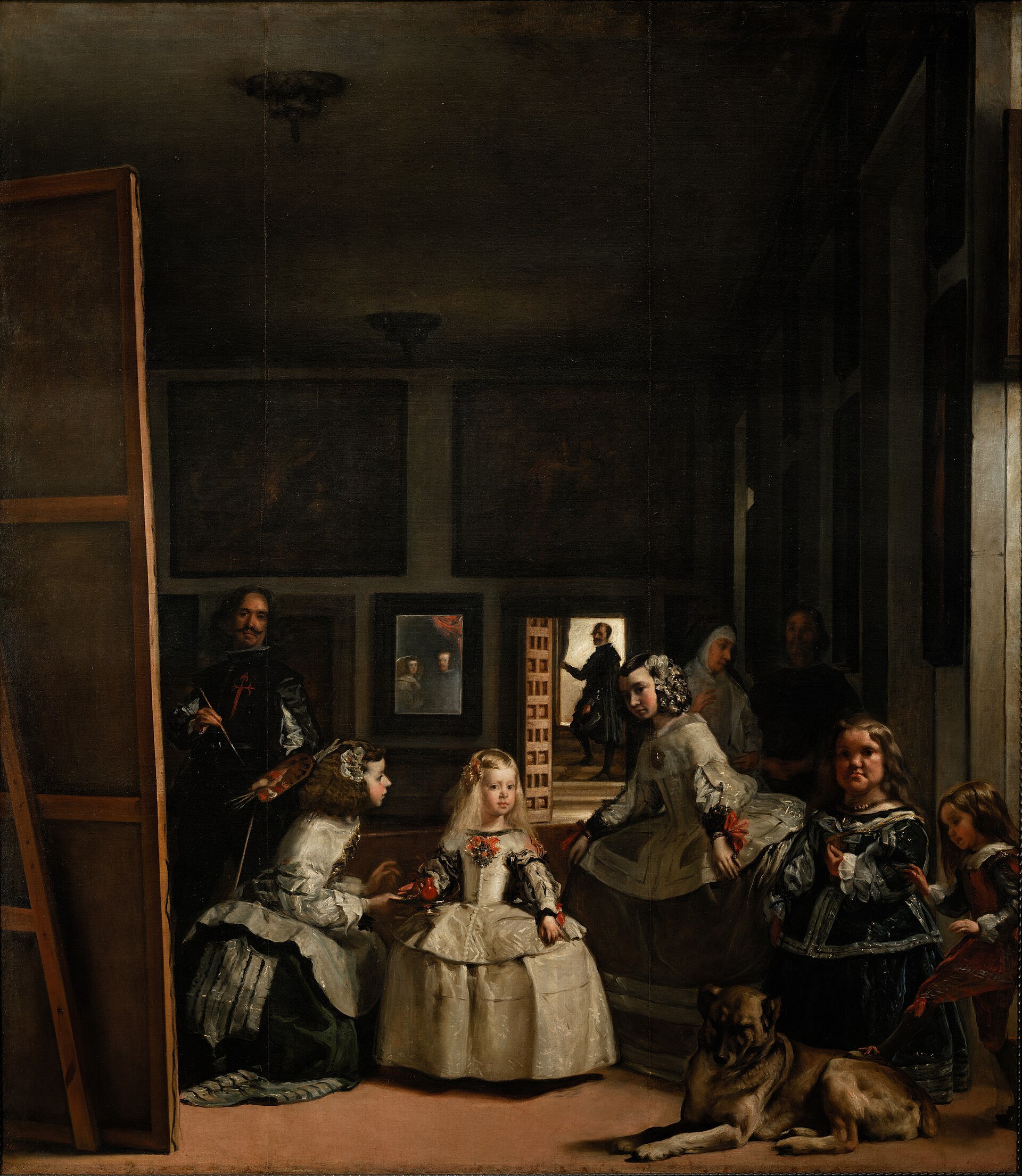
Diego Velázquez, Las Meninas, 1656, Museo del Prado
The seventeenth century was peculiarly well equipped to make perception unstable. It inherited a world of Christian theology, providential history, classical learning, allegorical interpretation and deeply entrenched metaphysical systems. At the same time, observation was acquiring new authority. Scientific inquiry increasingly insisted upon the examination of nature. European conceptions of geography and cosmology were expanding. Political states were becoming more centralized. Commercial networks multiplied. Knowledge was being reorganized by instruments, measurements, collections, experiments and increasingly secular methods of inquiry.
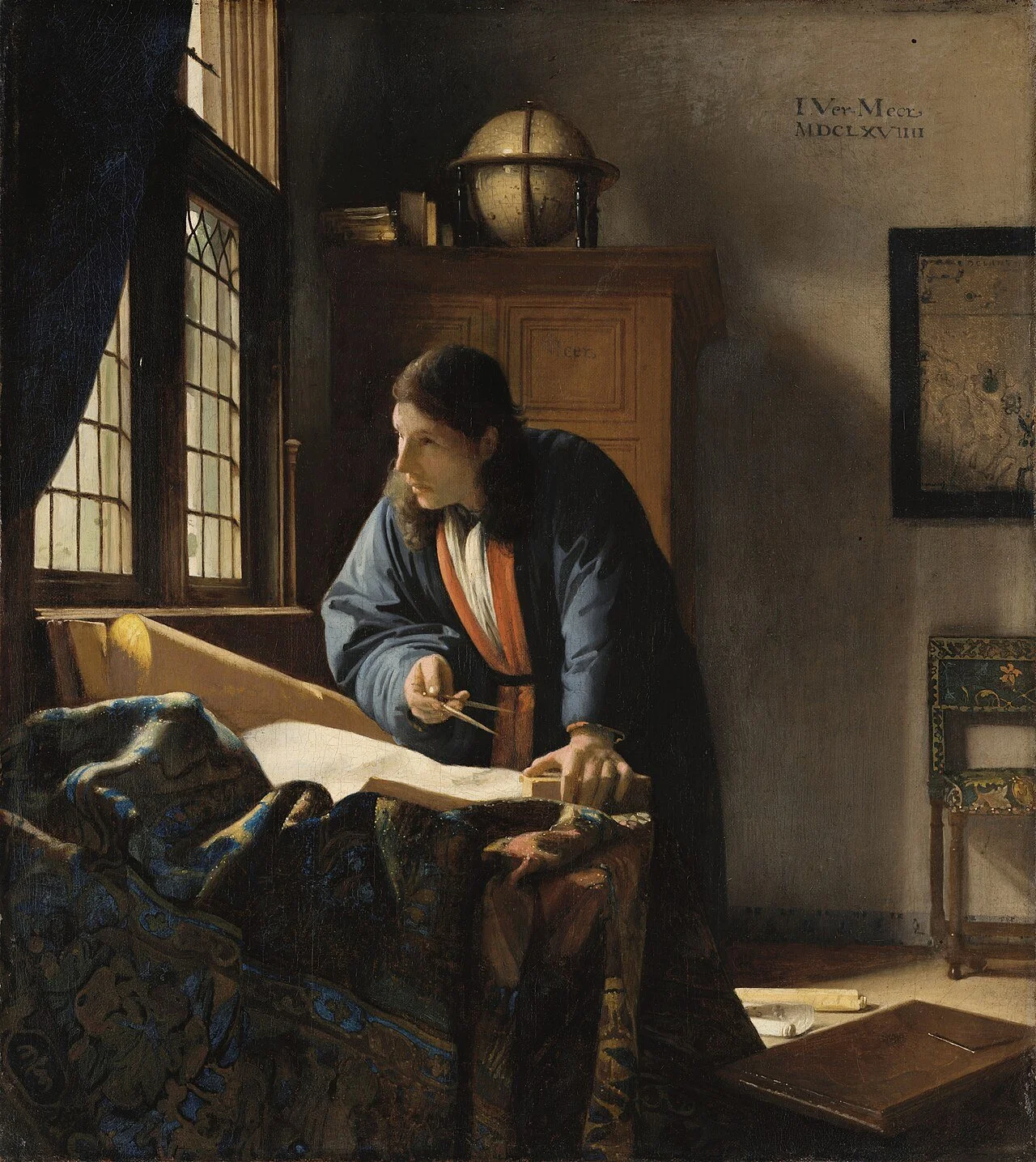
Johannes Vermeer — The Geographer, 1669
The century consequently looks in two directions at once. Its eyes remain fixed upon eternity. Its hands are measuring the world. That doubleness is one of the central conditions of Baroque art. Naturalism therefore matters enormously, but not because seventeenth-century artists suddenly discovered that human beings possess wrinkles. The significance of Baroque naturalism lies in a changing confidence in visible things.
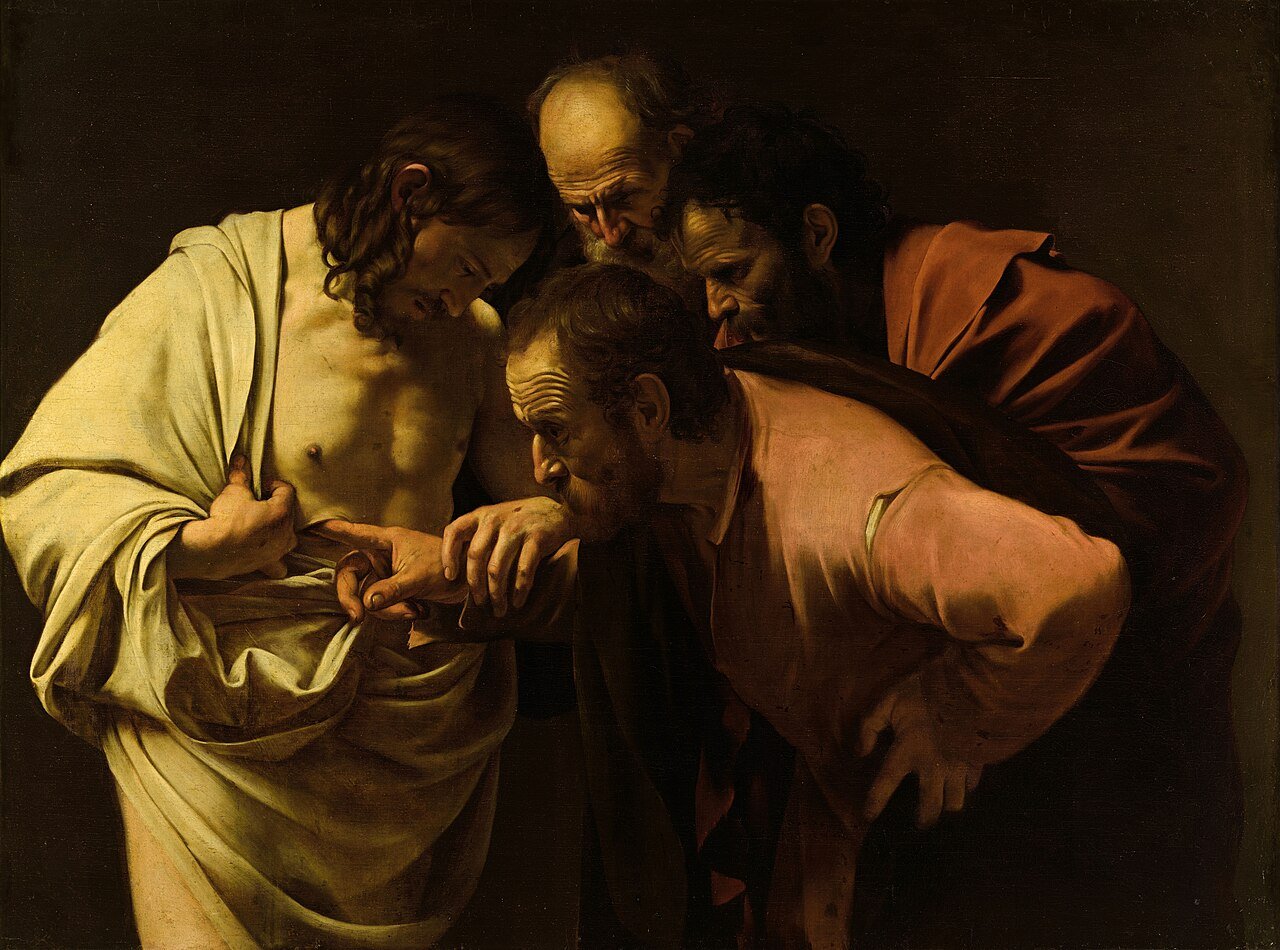
Caravaggio — The Incredulity of Saint Thomas, c. 1601–1602
Caravaggio is exemplary. His sacred narratives repeatedly insist upon the physical credibility of the world they depict. Bodies have weight. Feet accumulate dirt. Skin ages. Death affects flesh unpleasantly. Darkness is not a polite backdrop but a positive substance from which forms emerge under carefully controlled illumination. His realism is not merely observational fidelity. It is an argument about access.
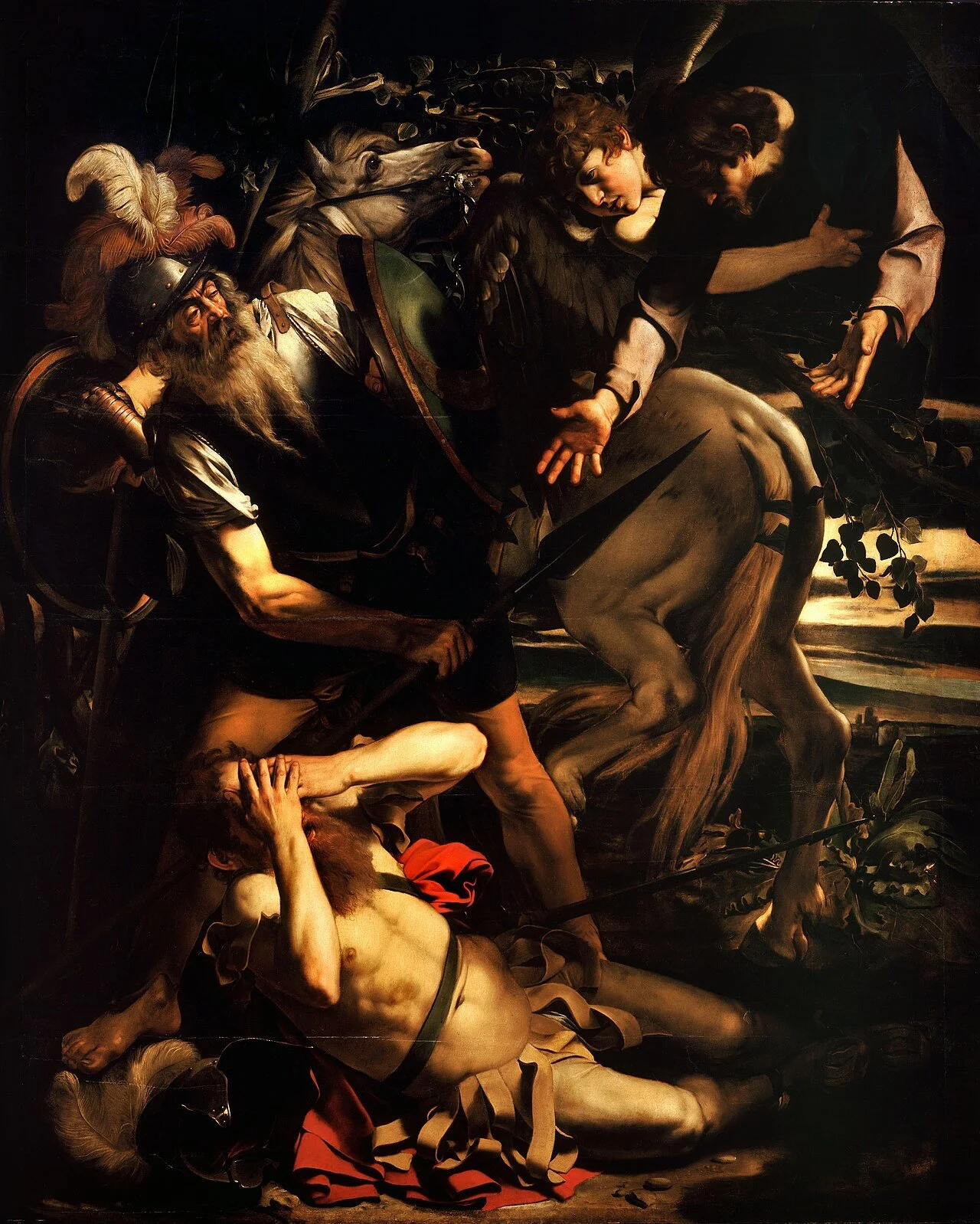
Caravaggio — The Conversion of Saint Paul / Conversion on the Way to Damascus, 1600-1601
Sacred history is no longer protected by an idealizing membrane separating it from ordinary existence. The divine appears among bodies subject to gravity, fatigue, dirt, pain and mortality. The sacred, in Caravaggio, has knees. This does not make his art secular in any simple sense. On the contrary, its naturalism often intensifies the supernatural by making it physically credible. A divine event becomes more disturbing precisely because it appears capable of occurring in a room occupied by people like us. That paradox extends throughout the period. The Baroque wanted the supernatural to become materially convincing without allowing matter to become merely material. This is why seventeenth-century naturalism can coexist so comfortably with allegory, symbolism and metaphysics. Modern viewers sometimes assume that realism and symbolic meaning belong to opposite artistic systems: either an object is a convincing representation of something in the world, or it is a sign pointing elsewhere.
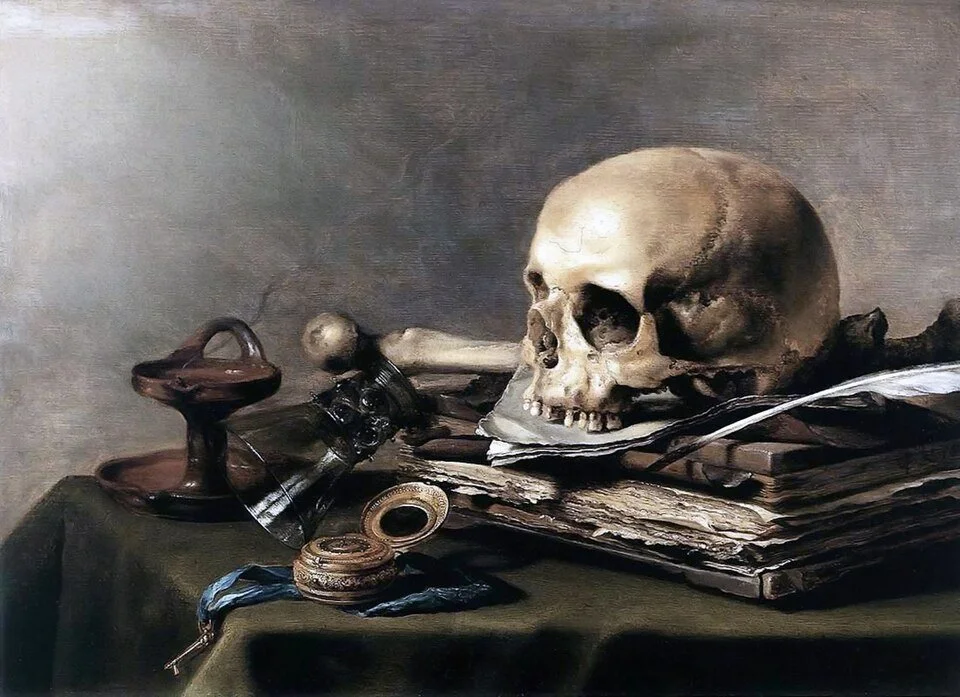
Pieter Claesz — Vanitas Still Life, 1630
Baroque culture saw no reason to choose. A skull could be a beautifully observed skull and a meditation upon mortality. A flower could be botanically persuasive and morally unstable. A watch, extinguished candle, overturned glass or decaying fruit might record the pleasures of material existence while reminding the viewer that material existence has an inconvenient habit of ending. Still-life painting could therefore possess an almost scientific concentration upon surfaces while functioning as a philosophical instrument. A lemon might be asked to perform several intellectual duties at once.
The same habit of mind shaped religious imagery. Biblical events continued to participate in complex traditions of typology, in which one scriptural episode could prefigure another. The visible event was therefore rarely confined to itself. It possessed echoes, correspondences and theological consequences.
Reality, in the Baroque, could be minutely observed precisely because reality was believed to contain more than appearances. This produces another of the period’s central preoccupations: the problem of interior experience. Seventeenth-century artists became formidable investigators of what earlier writers called the passions of the soul. Fear, grief, desire, conviction, ecstasy, cruelty, endurance and spiritual absorption had to acquire external signs. That task is more difficult than it sounds. A painter can depict a hand. A painter cannot directly depict belief. The problem is therefore one of inference. The invisible must become legible through visible evidence: posture, muscular tension, gesture, gaze, complexion, breathing, touch, weight, light.

Rembrandt van Rijn — The Return of the Prodigal Son, c. 1668–1669
Artemisia Gentileschi’s Mary Magdalene in Ecstasy demonstrates the complexity of the problem. The spiritual state is not delivered through an elaborate inventory of conventional symbols. It is concentrated in the body: the head inclined backward, the eyes closed, the throat exposed, the hands locked together, the figure suspended between exhaustion and absorption. We see almost everything except the experience itself. And that is precisely the point. The painting allows us to inspect the physical consequences of an interior event to which we have no direct access. The spectator becomes a diagnostician of the invisible.
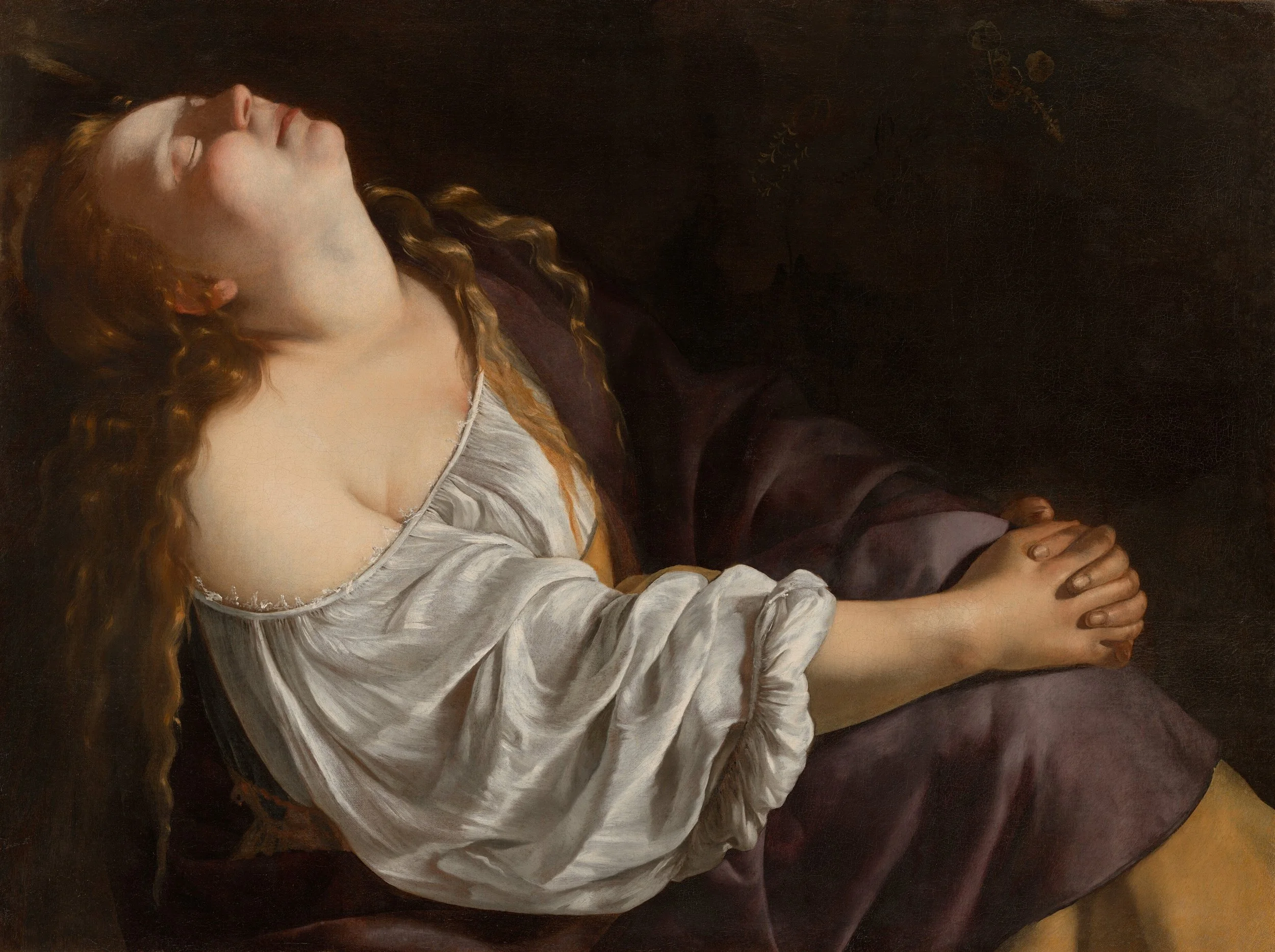
Artemisia Gentileschi’s Mary Magdalene in Ecstasy, c. 1620s
Bernini takes the same problem and enlarges it into space. In works such as the Ecstasy of Saint Teresa, mystical experience is not confined to sculpted anatomy. Marble, architecture, gilding, colour, concealed illumination and theatrical framing are coordinated into a single perceptual system. To call this “theatrical” is correct but incomplete. The theatre is not an analogy casually applied to Bernini. It is almost a method.
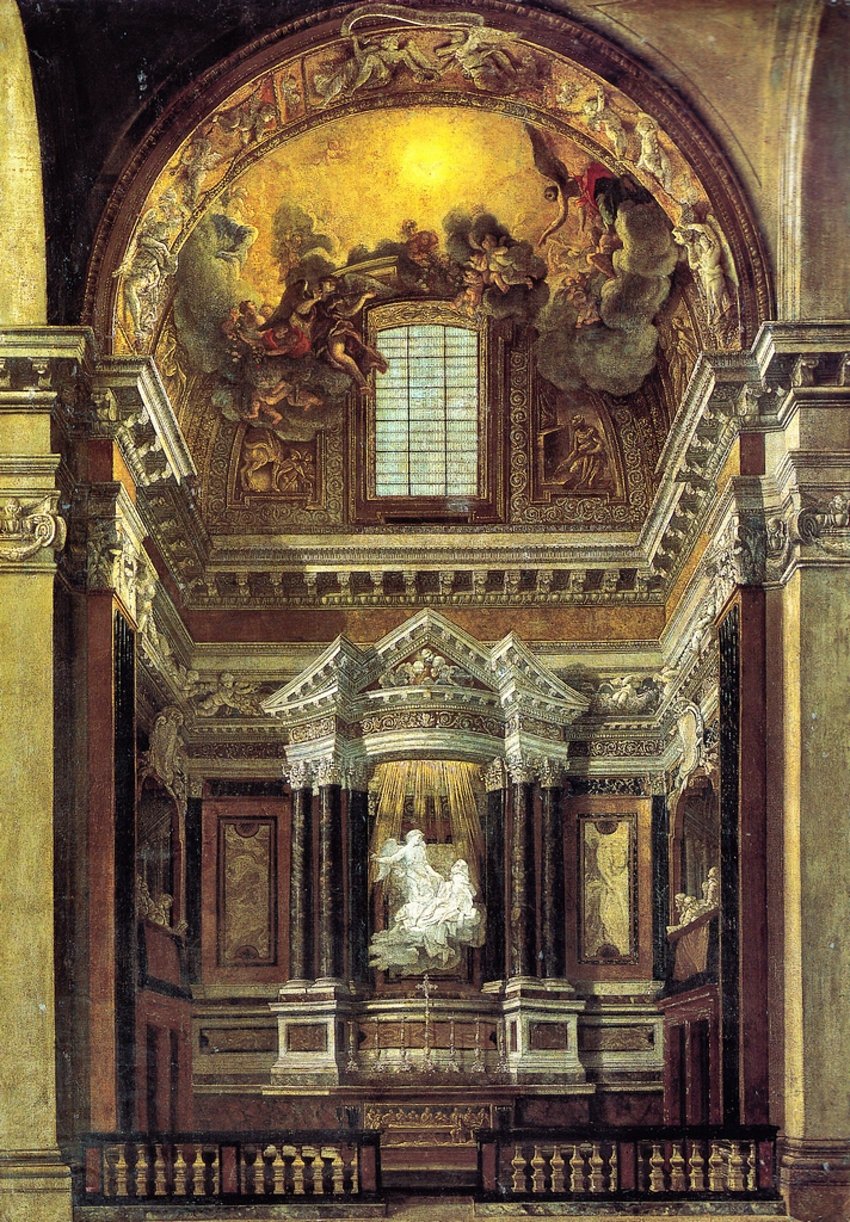
Gian Lorenzo Bernini — Cornaro Chapel, Santa Maria della Vittoria, Rome, 1647–1652
The Cornaro Chapel does not simply contain a sculpture of Teresa. It stages the conditions under which Teresa is seen. Members of the Cornaro family appear in sculpted side boxes, effectively represented as spectators within the work. Architecture frames the event. Hidden light acquires supernatural agency. The central figures occupy a space that appears simultaneously material and visionary. Bernini’s real medium was not marble alone. It was the spectator’s position in space. This concern with spectatorship is fundamental to Baroque visual culture.
Renaissance perspective had already organized vision with extraordinary sophistication, but Baroque artists often pushed beyond the stable distinction between fictive space and real space. Painted ceilings dissolve architectural limits. Trompe-l’œil devices allow fictional forms to cross the boundary of the picture plane. Sculptures seem unwilling to remain obediently within niches. Columns advance and retreat. Walls curve. Interior and exterior spaces appear to communicate.
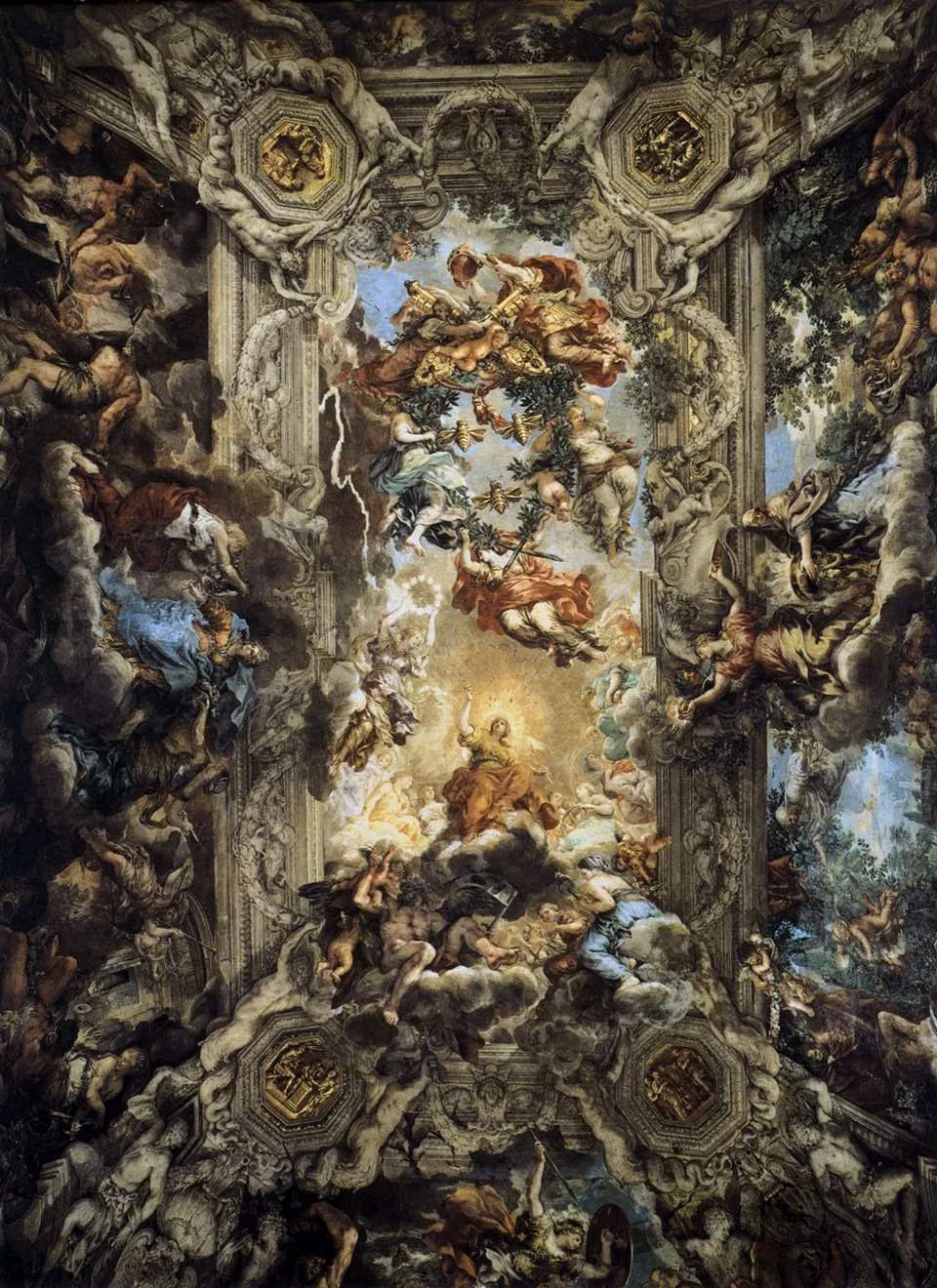
Pietro da Cortona — Allegory of Divine Providence and Barberini Power, Palazzo Barberini ceiling, 1633–1639
The work no longer simply represents another world. It negotiates the boundary between that world and ours. This is what makes the Baroque fascination with space intellectually richer than mere spectacle. The seventeenth century had inherited from the scientific revolutions of the preceding generations a radically enlarged conception of the cosmos. The older closed universe had become increasingly difficult to sustain. Space could now be imagined on scales that strained ordinary human intuition.
Infinity acquired cultural force. Baroque illusionism gave infinity architecture.
The great painted ceilings of the period repeatedly convert physical boundaries into apparent openings. Architecture continues upward only to dissolve into painted architecture, clouds, celestial bodies and radiant atmospheres. The eye knows perfectly well that the roof remains in place. The eye is nevertheless persuaded to misbehave. This is not simply deception for its own sake. In religious settings, the instability of architectural space could serve a persuasive theological purpose: the finite structure of the church appeared to open toward a realm beyond material enclosure. The illusion works because the spectator is never entirely outside it. Baroque space is frequently coextensive space. The real space occupied by the viewer and the represented space constructed by the artist are designed to operate together.

Giovanni Battista Gaulli, Triumph of the Name of Jesus, is located in the Church of the Gesù in Rome and was painted between 1672 and 1685
The real space occupied by the viewer and the represented space constructed by the artist are designed to operate together.
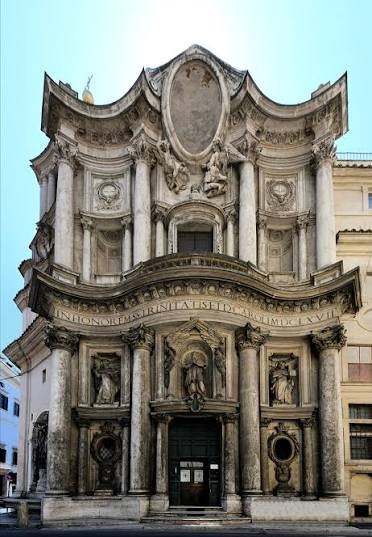
Francesco Borromini pursued this destabilization architecturally rather than pictorially. Classical elements remain everywhere in his work, but their expected stability is subjected to geometric pressure. Façades advance and recede. Surfaces undulate. Walls no longer behave as passive boundaries. Spatial sequences unfold through curves, compressions and expansions that resist being apprehended from a single position.
Architecture becomes something one experiences temporally. That point leads to another essential Baroque category: time. The conventional description of Baroque art as “dynamic” is accurate but insufficient. Movement matters because movement implies temporality. A raised arm belongs to an action that has begun but not ended. A falling body predicts impact. A turning head suggests a stimulus that occurred moments earlier. Wind-driven fabric indicates an invisible force acting upon the present instant. A gesture therefore contains a before and an after.
Peter Paul Rubens understood this almost brutally well. His compositions organize bodies as systems of transferred force. Muscles rotate, torsos torque, limbs pull against one another, groups collide and separate. Flesh becomes the medium through which momentum is made visible. Narrative is not simply illustrated. It is physically underway.
This interest in transience extends beyond violent action. Landscapes register changing weather. Human expressions are caught before they settle. Vanitas imagery turns objects into measurements of duration. Allegories of Time present it as destroyer, revealer or judge. Cycles of seasons and alternations of daylight allow the visible world to become evidence of continuous change. The Baroque image is therefore frequently about the difficulty of arresting the instant.
Even Vermeer, whose paintings seem almost aggressively quiet beside Rubens or Bernini, belongs to this temporal intelligence. Girl with a Pearl Earring contains almost no narrative apparatus. We do not know precisely who the figure is, where she stands, what she has been doing or why she has turned. And yet she has unmistakably turned. That small movement is enough. The parted lips imply continuation. The glance has duration. The turn of the head creates an event whose cause has been withheld. Has someone spoken? Is she about to answer? Did we interrupt her? The painting refuses to provide the information necessary to conclude the episode. Its ambiguity is not a lack of meaning. It is an instrument for prolonging attention.
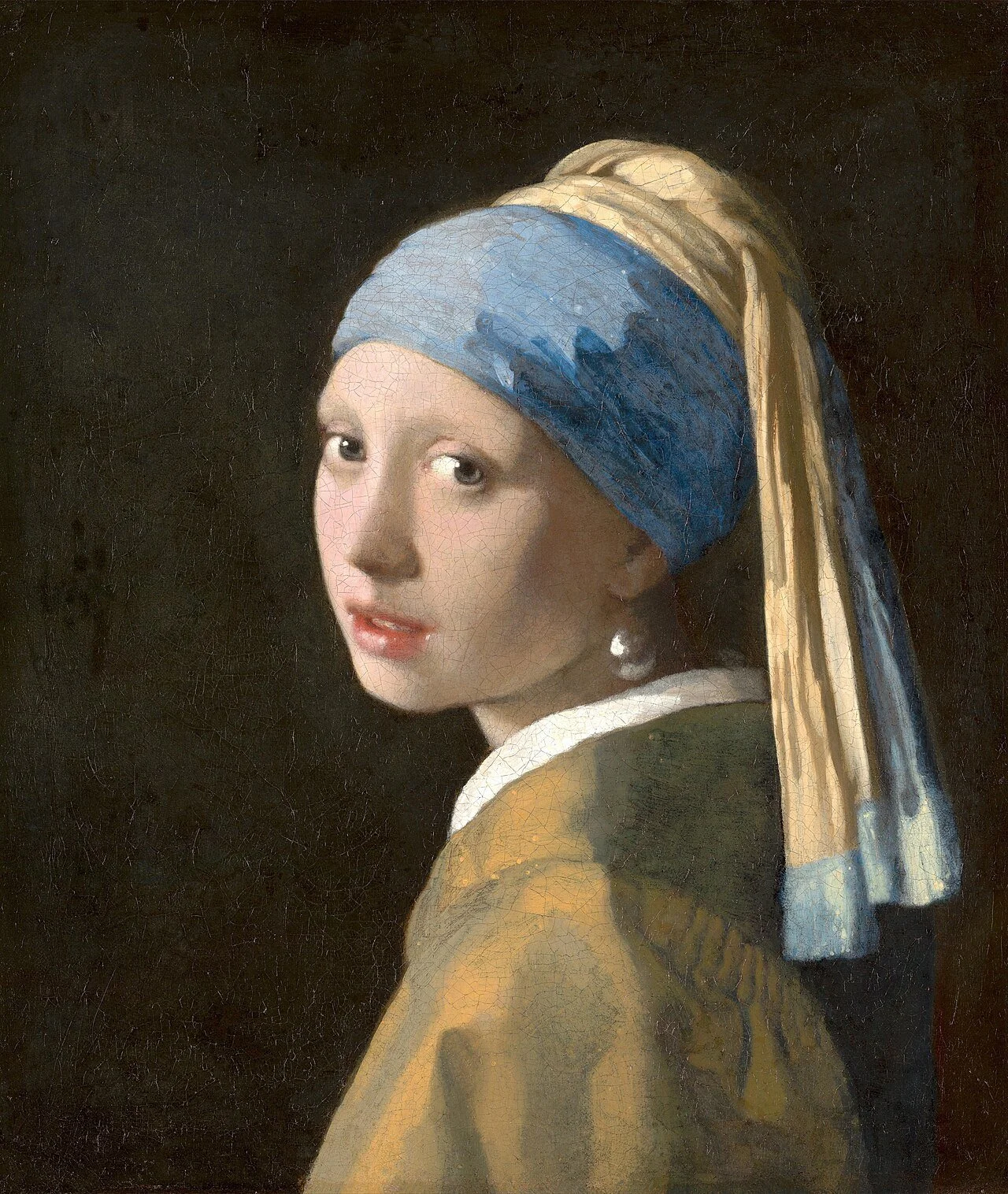
Johannes Vermeer, Girl with a Pearl Earring, c. 1665
Bernini expands the unstable instant until it becomes spectacle. Vermeer reduces it until uncertainty itself becomes the spectacle. Both understand that spectatorship occurs in time. Light participates in all of this with almost suspicious versatility. Few artistic periods have assigned illumination so many simultaneous occupations. Light is first of all physical. It reveals form, establishes volume, locates bodies and differentiates surfaces. The naturalistic study of illumination belongs to the same culture of observation that makes landscape, still life and portraiture increasingly sophisticated. But Baroque light rarely remains innocent for long.
In Caravaggio, illumination can be optically plausible and spiritually charged at the same time. A beam of light may behave according to the logic of a room while acquiring the rhetorical force of divine selection. Bernini literalizes the problem by manipulating actual architectural light. Concealed sources permit physical illumination to appear as metaphysical presence. The distinction between natural and supernatural becomes intriguingly difficult to police. In Rembrandt, light often becomes psychological. It does not merely reveal a face but seems to emerge from its encounter with consciousness. Illumination can imply inwardness, attention, age, memory or spiritual presence without ever becoming a simple symbol.
At Versailles, light acquires yet another profession: politics. The solar symbolism associated with Louis XIV transforms illumination into a theory of monarchy. The ruler is imagined as a radiant centre from which order proceeds outward. Cosmic imagery, architecture, ceremony and royal identity reinforce one another. The Sun King was not merely fond of flattering metaphors. The metaphor constituted a political cosmology. Baroque visual culture repeatedly performs this kind of conversion: physical phenomena become ideological structures. And yet none of this implies that the seventeenth century rejected classical antiquity. Quite the opposite. The Baroque remained deeply entangled with the ancient world.
Carracci, Poussin, Algardi, Duquesnoy, Rubens and Bernini all engaged classical models, though they did so in radically different ways. Classical sculpture furnished an immense repertoire of poses, anatomical solutions, gestures and ideals. Ancient architecture remained a primary intellectual authority. But antiquity was not a fixed language. French classicism increasingly codified it. Bernini animated it. Borromini argued with it. Rubens made it perspire. The distinction between “Baroque” and “Classical” therefore becomes unstable if treated too rigidly. Seventeenth-century culture could pursue theatrical illusion and classical order simultaneously. Different national traditions placed different pressures upon the same inherited vocabulary.
In England and the Dutch Republic, Palladian mediation shaped architectural classicism. In France, the ancient Orders acquired powerful theoretical authority and were subjected to increasingly systematic interpretation. In Italy, architects who understood the classical tradition profoundly could nevertheless handle it with considerably more liberty. Bernini’s architecture demonstrates that reverence need not imply obedience. Borromini demonstrates the point more emphatically. By the late seventeenth and early eighteenth centuries, figures such as Johann Bernhard Fischer von Erlach would enlarge architectural classicism into something close to comparative world history.
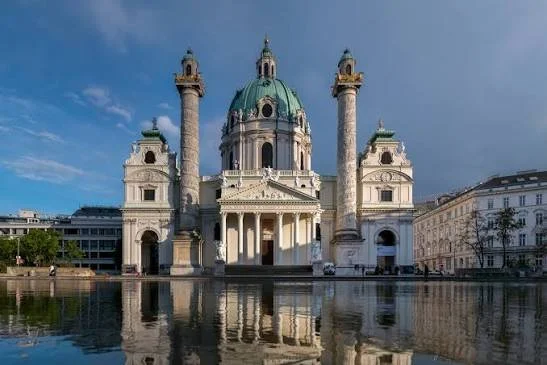
Johann Bernhard Fischer von Erlach, Karlskirche, 1716-1737
The Karlskirche (English: Charles Church) is a Baroque church in the Karlsplatz in Vienna, Austria. The church is dedicated to Saint Charles Borromeo, a leading figure of the Counter-Reformation. The church is located on the border of Wieden and the Innere Stadt, the city centre.
Ancient Rome, biblical antiquity, dynastic genealogy and imperial ambition could be mobilized within a single architectural imagination. Architecture ceased merely to house power. It learned to historicize it. This helps explain why the Baroque should not be understood simply as an age of emotion. It was an age of extraordinarily ambitious connections. Naturalism and allegory. Science and metaphysics. Optics and theology. Psychology and anatomy. Theatre and architecture. Political authority and cosmology. Classical antiquity and modern experimentation. Finite matter and imagined infinity. Its characteristic achievement lies not in resolving these oppositions but in making them productive.
The visible world became increasingly concrete at the same moment that its meanings multiplied. A body could be studied anatomically and imagined spiritually. A beam of light could obey optics and signify grace. A palace could be a building and an argument about sovereignty. A still life could offer sensual abundance while quietly announcing the futility of sensual abundance. A ceiling could remain structurally intact while persuading the spectator that architecture had ceased to exist.
The Baroque did not simply decorate uncertainty. It constructed systems for experiencing it. That may be why its most convincing works still feel less like objects than events. They regulate distance, manipulate attention, delay understanding, stimulate bodily response and place the viewer in a field where perception becomes active rather than neutral. The spectator is made to look upward, move sideways, approach, recoil, infer, doubt, identify, submit or question. The artwork behaves almost experimentally. Its materials are marble, pigment, stucco, canvas, architecture and light. Its variable is the human observer.
The Baroque’s most important subject, then, was not ornament. Nor was it emotion alone. It was the unstable frontier between what could be seen and what could be known; between what could be measured and what could only be believed; between the body that occupies space and the mind that exceeds it. Baroque art dared to feel because it first dared to ask a more difficult question: what, exactly, happens to a human being when an image becomes an experience?
Bibliography:
Hills, Helen, ed. Rethinking the Baroque. Farnham: Ashgate, 2011. Essential for avoiding the idea of Baroque as one homogeneous European style.
Martin, John Rupert. Baroque. New York: Harper & Row, 1977. A foundational thematic interpretation of Baroque characteristics.
Wittkower, Rudolf. Art and Architecture in Italy, 1600–1750. 6th ed. New Haven: Yale University Press, 1999. The standard foundation for Italian painting, sculpture and architecture.
Wölfflin, Heinrich. Renaissance and Baroque. Translated by Kathrin Simon. Ithaca: Cornell University Press, 1966. Originally published 1888. Historically important because Wölfflin helped transform “Baroque” from a term of condemnation into a serious art-historical category. His Renaissance–Baroque opposition must now be used critically, not accepted unmodified.
Council of Trent. “On the Invocation, Veneration, and Relics of Saints, and on Sacred Images.” Session 25, 3–4 December 1563. The necessary primary source. It prevents us from attributing claims to Trent that the decree never actually made.
Hall, Marcia B., and Tracy E. Cooper, eds. The Sensuous in the Counter-Reformation Church. Cambridge: Cambridge University Press, 2013. One of the most relevant scholarly collections for the use of images, relics, architecture, music, ritual and the senses in Catholic experience.
Jones, Pamela M. Altarpieces and Their Viewers in the Churches of Rome from Caravaggio to Guido Reni. Aldershot: Ashgate, 2008. Especially important for reconstructing how actual seventeenth-century viewers encountered Roman religious paintings.
Levy, Evonne. Bernini's Biographies (Critical Essays) Pennsylvania State University Press, 2007. A revisionist study distinguishing rhetoric, persuasion and propaganda rather than casually equating Baroque religious art with manipulation.
Paleotti, Gabriele. Discourse on Sacred and Profane Images. Translated by William McCuaig. Los Angeles: Getty Research Institute, 2012. Originally published 1582.
A crucial early modern text on what religious images were expected to communicate and accomplish.Beaven, Lisa, and Angela Ndalianis, eds. Emotion and the Seduction of the Senses, Baroque to Neo-Baroque. Kalamazoo: Medieval Institute Publications, 2018.
Directly aligned with the article’s argument about immersion, performance and soliciting emotion.Kaup, Monika. “Feeling Baroque in Art and Neuroscience: Joy, Sadness, Pride, and a Spinozist Solution to the Quest for Happiness.” In Emotion and the Seduction of the Senses, 19–42. 2018. Particularly relevant to the phrase “dared to feel” and to the Baroque concern with passions, bodies and the inner life.
Montagu, Jennifer. The Expression of the Passions: The Origin and Influence of Charles Le Brun’s Conférence sur l’expression générale et particulière. New Haven: Yale University Press, 1994. Documents the seventeenth-century effort to understand and codify how passions become visible through faces and bodies.
Warwick, Genevieve. Bernini: Art as Theatre. New Haven: Yale University Press, 2012. Supports the discussion of Bernini’s fusion of sculpture, architecture, ritual, illusion and performance.